Products
Tempered Glass
Produced by processing ordinary flat glass into safety tempered glass through a controlled heat-treatment process. 4–5× stronger than annealed glass and fractures into small blunt granules.
Process and glass types
- Glass is heated to approximately 650 °C then rapidly cooled, creating surface compression and internal tension.
- Plate, sheet and float glass may be used, including clear, super-clear, tinted and suitable patterned glass.
- Satin, sandblasted, ceramic-coated, reflective, Low-E, self-cleaning and hydrophobic products require coating compatibility checks before tempering.
- Mirror and color-coated products must be tempered before their final coating is applied.
Advantages
- 4–5× mechanical strength and heat resistance vs. annealed glass
- Fractures into small honeycomb granules without sharp edges — safety glass per EN 12150
- Withstands heat up to 290 °C and sudden temperature changes up to 150 °C
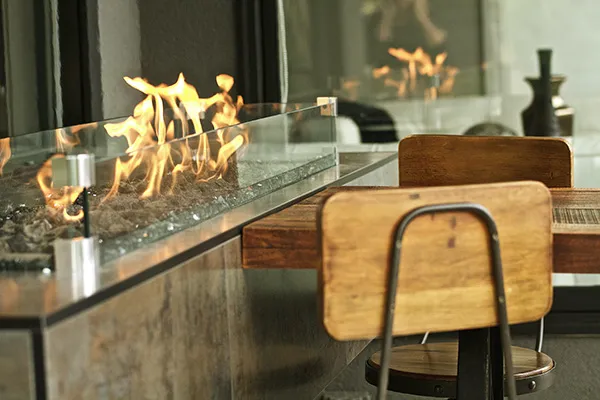
- Used for spotlight fittings, fireguards, gas stove bases and hot-pot stands
Application
- High-impact or wind-exposed areas — squash courts, sports field barriers, ice hockey and skating rinks
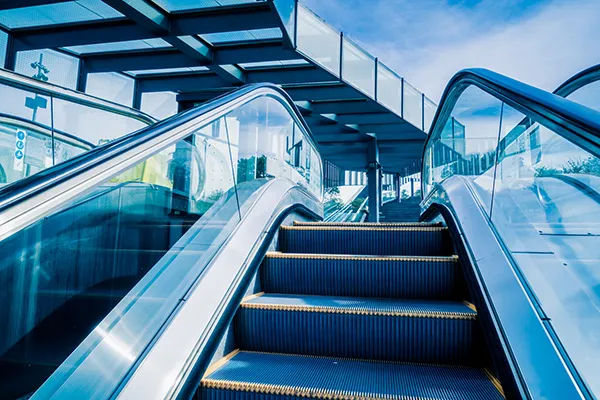
- Mandatory safety glazing next to fittings: doors, low windows, balustrades
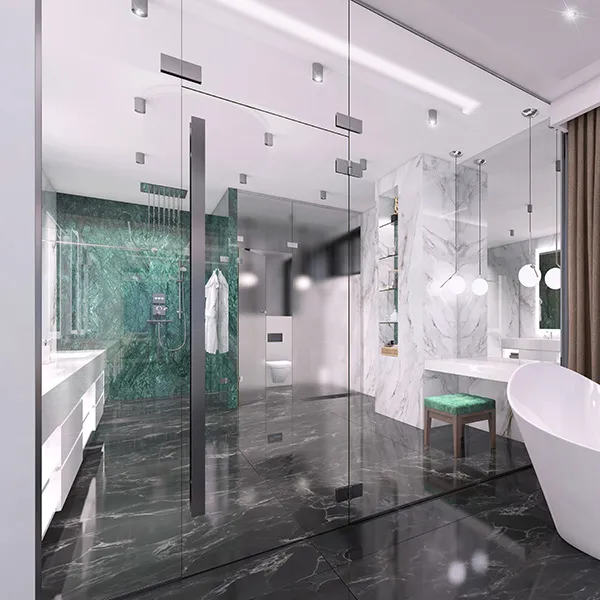
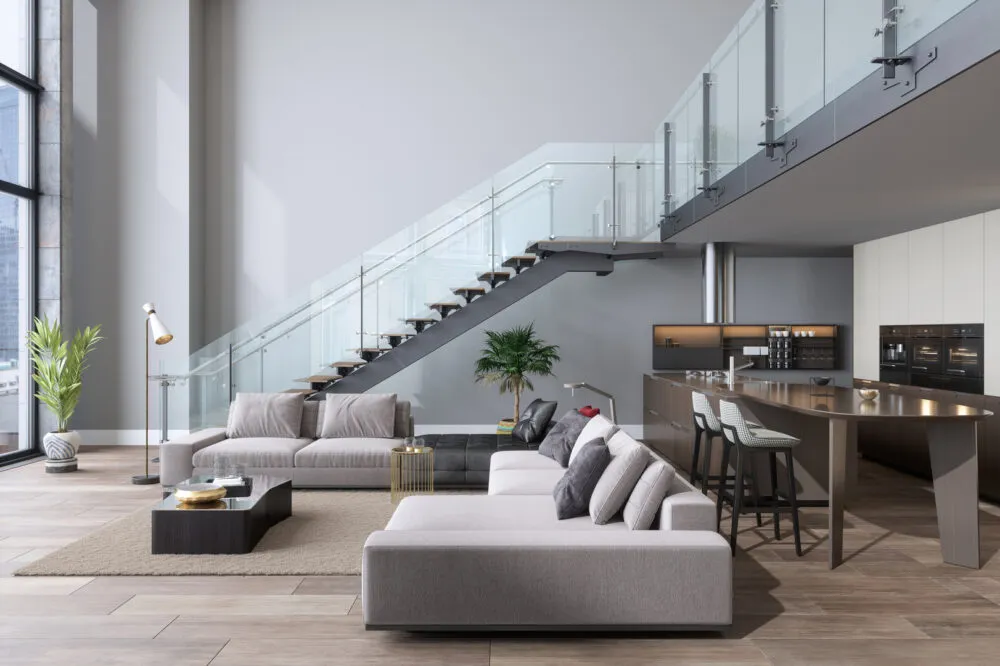
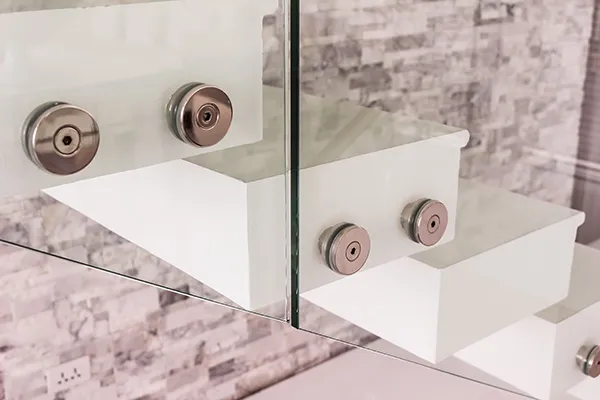
- Shower doors, staircase enclosures, glass fences and general decoration
Limitations and inspection
- Tempering can introduce controlled roller wave or bow.
- Nickel-sulfide inclusions can cause spontaneous breakage at roughly 8 panes per 1,000; a butterfly fracture may indicate NiS.
- Tempering can be verified by destructive testing, laser equipment or polarizing film.
- Minimum production size is 180 × 180 mm or a diagonal over 250 mm; site dimensions and installation clearances must be confirmed before production.
Caution in use
- Tempered glass is not fire-resistant — unsuitable as a fire barrier or an oven peephole above 290 °C
- Cannot be cut, drilled or edge-worked after tempering; all holes and edging must be specified before processing
- Avoid edge pressure, levering and direct contact with hard materials during installation.
- Do not use a single tempered pane for roofs, high-rise façades, floors or stairs; use an appropriately designed laminated construction
Specifications
| Thickness | 4, 5, 6, 8, 10, 12, 15, 19 mm |
|---|---|
| Max. size | 2,800 × 6,000 mm |
| Minimum size | 180 × 180 mm, or diagonal over 250 mm |
| Standard | TIS 965-2537 / TIS 965-2560, EN 12150 |
| Breakage | Small blunt granules — safe |
| Heat resistance | Up to 290 °C, thermal shock 150 °C |
Product gallery
Tempered Glass examples